

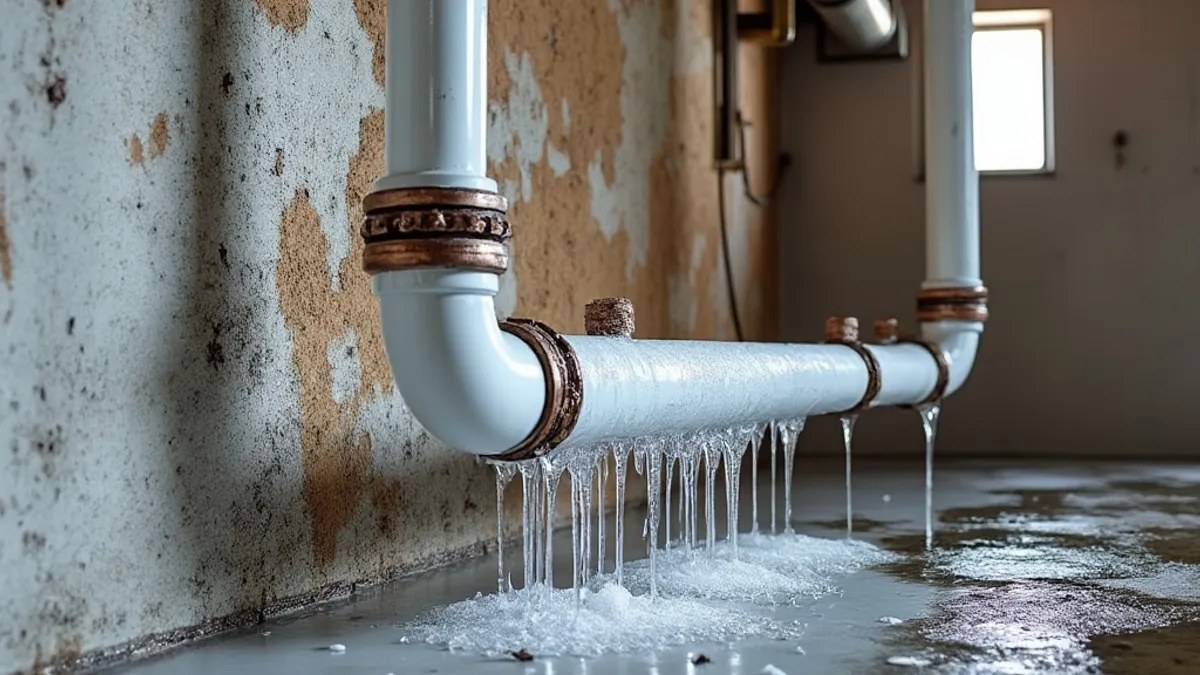
Clean water
Water from a sanitary source — a broken supply line, a water heater, a tub left running. ANSI/IICRC S500 notes it does not stay Category 1 forever: time, temperature and contact with building materials can push it into Category 2 or 3.
Serving all of Pinellas County · Open 24/7 · (727) 263-3778
Floodwater comes into a Pinellas County home at the floor. There is no basement here — the county's homes sit on slab or, in the oldest bungalows, a crawl space — so when the Gulf or Tampa Bay pushes water across a yard, the first thing it touches is the bottom of the wall and the underside of the flooring. That changes everything about how the cleanup is run. United Water Restoration Group of Pinellas County works out of 3734 131st Avenue N, Unit #12, Clearwater, FL 33762, in the Gateway area beside the St. Pete–Clearwater airport. From there, Pinellas Park starts essentially at our door, downtown St. Petersburg is fifteen to twenty minutes down I-275, and downtown Clearwater is about the same by way of Roosevelt Boulevard. We also cover Largo, Seminole, Dunedin and Palm Harbor. Crews are available 24/7, and our rating is 4.93 stars across 169 reviews. This page is about flood cleanup specifically: rising water, storm surge, and the water that comes up through a storm drain on a high tide. It is a different job from a broken supply line, and the difference starts with what the water carried in with it.
Water that comes in from outside arrives at ground level and stays low. It does not drip down from a ceiling; it spreads across the floor and climbs. In a typical Pinellas home — single-story, concrete block, built somewhere between 1950 and 1979, which is more than half the county's housing — the first casualties are the things nobody can see from the doorway.
Plank and laminate flooring is one. Water runs through the seams in minutes, sits on the slab underneath, and has nowhere to evaporate to because the plank above it is a vapor barrier. The floor looks fine for two days and then cups, buckles, or lifts at the ends.
Wall cavities are another. In a block home the drywall is not stuck to the block — it hangs on wood or metal furring strips, which leaves a narrow concealed gap behind the sheet. Floodwater fills that gap. A moisture meter pressed to the face of the drywall can read acceptable while there is standing water an inch behind it. That is the reason a flood job on a block wall almost always involves pulling baseboard and making a flood cut well above the visible water line, rather than trying to dry the wall in place.
Then there is everything sitting on the floor: the bottom plate of any wood-framed interior partition, cabinet kick boards, particleboard vanity bases, the paper facing on batt insulation, the ductwork if it runs low, and the bottom few inches of everything stored in a closet.
Two-story homes here are often block on the first floor and wood frame on the second, so the ground floor that floods is the one that dries slowest. The upstairs is untouched. The downstairs is a different building.
Restoration work classifies water by how contaminated it is. The IICRC S500 standard, now in its fifth edition from 2021, uses three categories. Category 1 is sanitary at the source — a supply line, an ice maker. Category 2 carries significant contamination. Category 3 is grossly contaminated and can contain pathogenic or toxigenic material.
Water that came in off Tampa Bay or the Gulf, or up out of a storm drain, is handled as Category 3. It picked up whatever was on the ground on the way in: yard chemicals, fuel and oil off driveways, sanitary sewer that surcharged, dead vegetation, and the contents of every garage between the shoreline and your door. Helene put water through Shore Acres, Snell Isle, Coquina Key and Venetian Isles that had never been in those houses before, and it was not seawater by the time it got there.
One honest caveat. In March 2026 the S500 consensus body issued a position statement saying weather-related water is not automatically Category 3 by rule — the category has to be determined by gathering information and inspecting the site, not assumed from the fact that a storm caused it. In practice, on a surge or rising-water loss in this county, the inspection nearly always confirms Category 3. We still do the inspection. It decides what can be cleaned and what has to leave the building.
What generally leaves: carpet and pad, batt insulation, drywall below the flood cut, particleboard and MDF cabinetry, upholstered furniture that absorbed water, and anything porous the water sat in. What generally stays: block, framing lumber that can be cleaned and dried, tile, terrazzo, solid wood cabinetry in many cases, and hard-surface contents. Everything removed gets documented before it goes, because you will need that record later.
Drying is where Florida flood work diverges hardest from the textbook. Three things work against you here at once.
The first is the slab. Pinellas flatwoods soils — Myakka, Immokalee, EauGallie, Wabasso, Pinellas — carry a seasonal high water table within six to eighteen inches of the surface for one to several months in a normal year. That is groundwater sitting against the underside of the concrete. On homes built before under-slab vapor barriers were routine, and the county's median build year is 1976, the slab pulls moisture up by capillary action and vapor diffusion whether or not it flooded. A slab can test acceptable at the surface and still push enough moisture to delaminate an adhesive or buckle a wood floor installed on top of it days later.
The second is the air. Relative humidity in the Tampa Bay area averages about 74 percent across the year and never drops below a 69 percent monthly average, even in the driest stretch. The EPA recommends keeping indoor relative humidity below 60 percent. Outdoor air here is above that essentially every day, which means you cannot dry a house by opening the windows. Drying has to be done inside a controlled envelope with dehumidification doing the work.
The third is the materials. S500 calls specialty drying of low-permeance, low-porosity assemblies a Class 4 loss, and lists exactly what Pinellas is built from: masonry, plaster, hardwood, lightweight concrete. Block holds water and feeds it back to whatever touches it. Terrazzo is a specific local problem — in 1950s and 1960s tract houses it was poured across the whole footprint and ground smooth before the partition walls went up, so water travels room to room underneath the walls and the floor cannot be sectioned off. The terrazzo itself usually survives. What fails is whatever was glued on top of it.
This is the question that decides the money, and most people find out the answer after the loss instead of before it.
Federal regulation defines a flood to include the overflow of inland or tidal waters. Storm surge is tidal water. That makes surge a flood loss, not a wind loss, and a standard Florida homeowners policy excludes flood entirely. Flood coverage comes from a separate NFIP policy or a private flood policy. A homeowners policy covers sudden and accidental water from inside the building envelope — a supply line that lets go, an appliance that fails — and rain that enters through an opening the windstorm itself created. That last clause is the whole fight after a hurricane: the same wet drywall is a covered wind loss if the roof or a window opened first, and an excluded flood loss if the water came in at the slab. Which is why we photograph the water line, the entry path and the exterior on day one, before anything is torn out.
Things worth knowing before you need them. NFIP residential limits are $250,000 on the building and $100,000 on contents, bought separately. An NFIP policy does not pay for temporary housing; homeowners policies typically do. New flood policies carry a 30-day waiting period, so you cannot buy coverage with a storm in the Gulf. Florida hurricane deductibles are a percentage of the dwelling limit, not the loss — five percent on a $400,000 limit is $20,000 — and they apply once per calendar year per insurer group, not per storm. Florida property insurance claims are barred unless reported within one year of the date of loss, and for a hurricane that clock starts at landfall, not at discovery; an NFIP flood claim runs on its own policy's proof-of-loss terms instead.
We do not adjust claims or promise what a carrier will do. We document.
A flooded house has two clocks running. The EPA's guidance is that wet materials dried within 24 to 48 hours will, in most cases, not grow mold. In a climate where St. Petersburg records muggy or worse conditions in every month of the year and the monthly normal low never falls below 52.5 degrees, there is no season that arrests growth for you. Nothing here dries on its own.
If mold does establish, Florida regulates the work. Chapter 468, Part XVI licenses mold assessors and mold remediators as individuals, not as companies, and the license requirement attaches to jobs over ten square feet — roughly a three-by-three patch, the same threshold the EPA uses for when a homeowner should stop doing it themselves. Florida also keeps the assessor and the remediator apart: a company that assessed a structure generally cannot remediate it for twelve months, and the reverse, with a carve-out for certified Division I contractors who disclose your right to request competitive bids. Ask for the license number of the individual on your job. The governing standard is ANSI/IICRC S520, fourth edition 2024, and the goal it sets is returning the affected area to Condition 1, normal fungal ecology — not "one hundred percent mold-free," which is not a thing.
The other clock is FEMA's. If repair costs reach 50 percent of the structure's pre-damage market value, substantial damage rules apply and the building has to be brought into floodplain compliance, usually meaning elevation, relocation or demolition. That is measured against the depreciated value of the structure only, not the land, which is why it lands hardest on older, modest homes on valuable lots. Largo, Dunedin and the county all ran substantial damage assessments after 2024. Scope matters. So does an accurate, itemized record of what the repair actually costs.
A few minutes of the right first moves can save thousands in damage. Here is what to do — and what not to do — before we arrive.
Crews are standing by in Pinellas County right now.
Call (727) 263-3778How It Works
The hardest part of property damage is facing it on your own. You do not have to — from the first phone call, it is our job, not yours.
Step 01
Any hour, any day, a real person picks up — not a machine and not a national call center. You describe what you are looking at, and from that moment it stops being your problem to solve on your own.
Step 02
Our crew works out how far it has really gone, including what you cannot see behind walls and under floors. You do not have to know what to look for, or guess how bad it is.
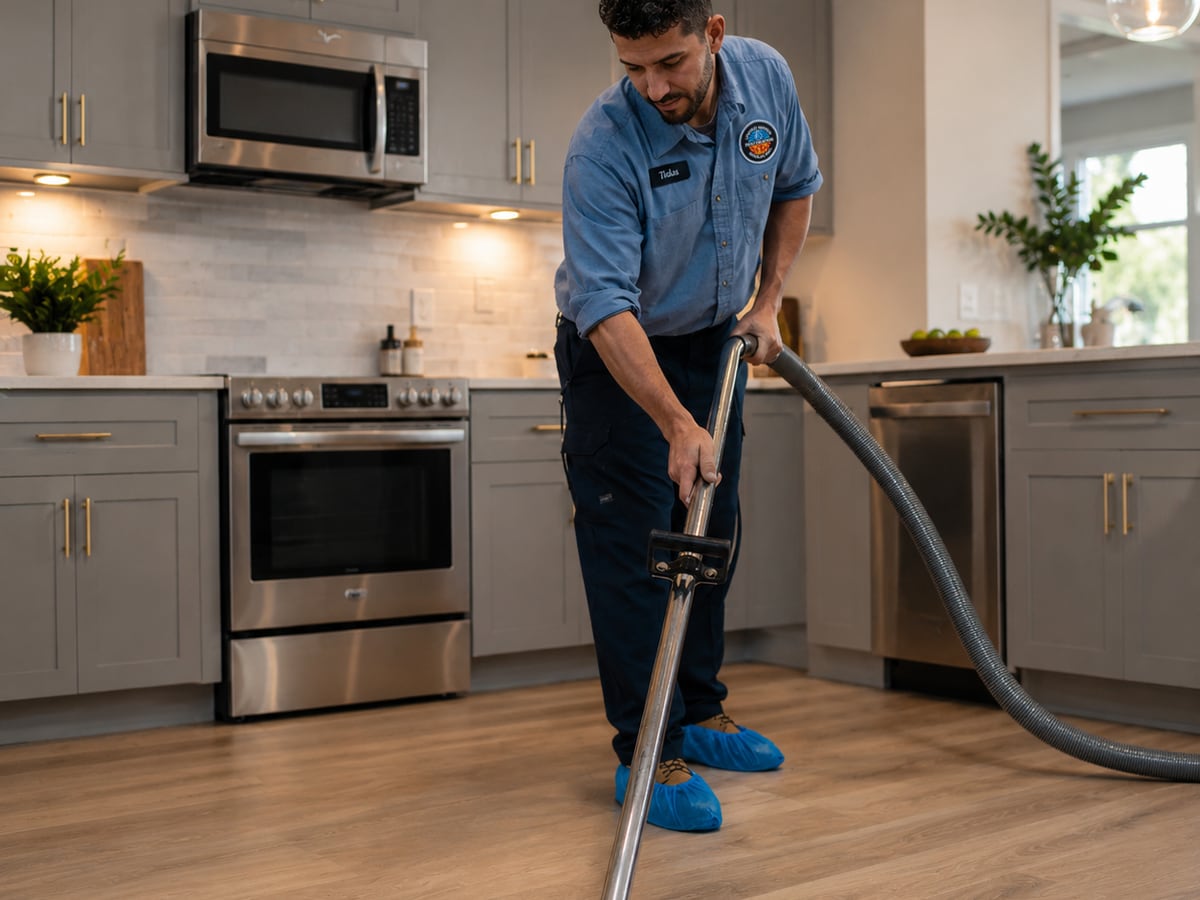
Step 03
What comes out, what gets dried, what can be saved — those are our calls to make, and we explain each one as we go. Readings are recorded throughout, so nothing rests on you taking our word for it.
Step 04
Our own team rebuilds what came out and hands the place back finished, with everything documented the way your adjuster expects it.
The restoration standard sorts water by how contaminated it is, and that classification — not how much of it there is — decides what can be dried and what has to go.
Water from a sanitary source — a broken supply line, a water heater, a tub left running. ANSI/IICRC S500 notes it does not stay Category 1 forever: time, temperature and contact with building materials can push it into Category 2 or 3.
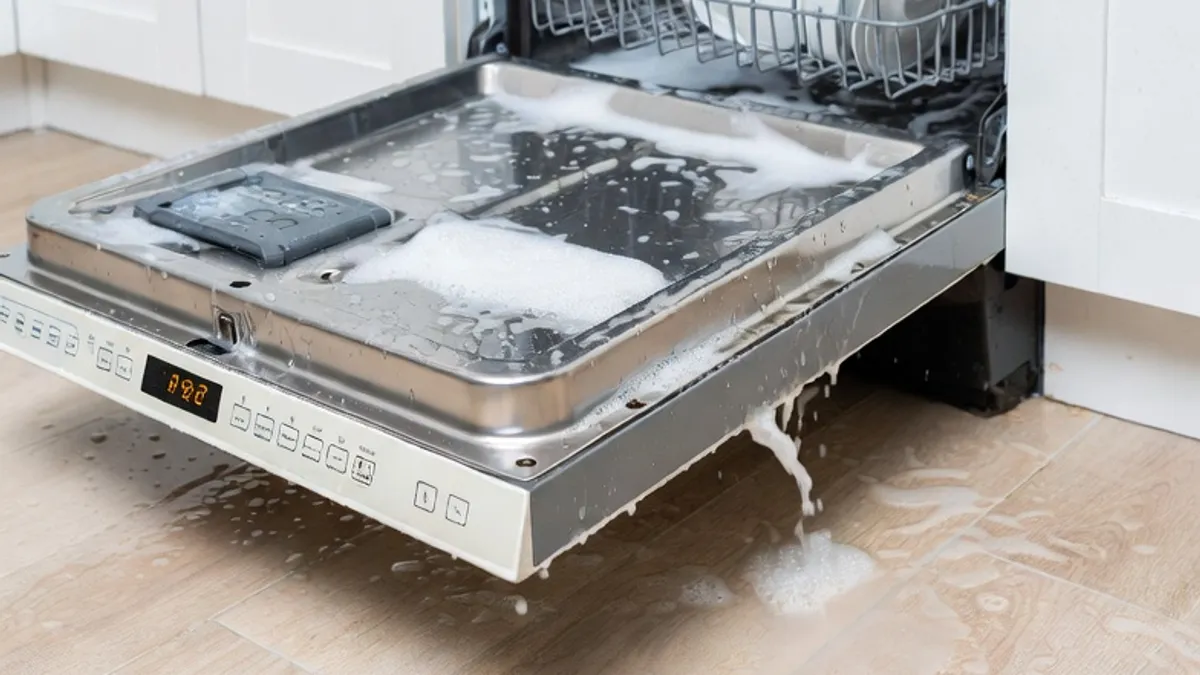
Water with significant contamination — enough that it could cause discomfort or illness if someone touched it or swallowed it. S500 puts dishwasher and washing-machine discharge, an overflow from the toilet bowl itself with urine but no feces, and seepage through a foundation under hydrostatic pressure in this group.
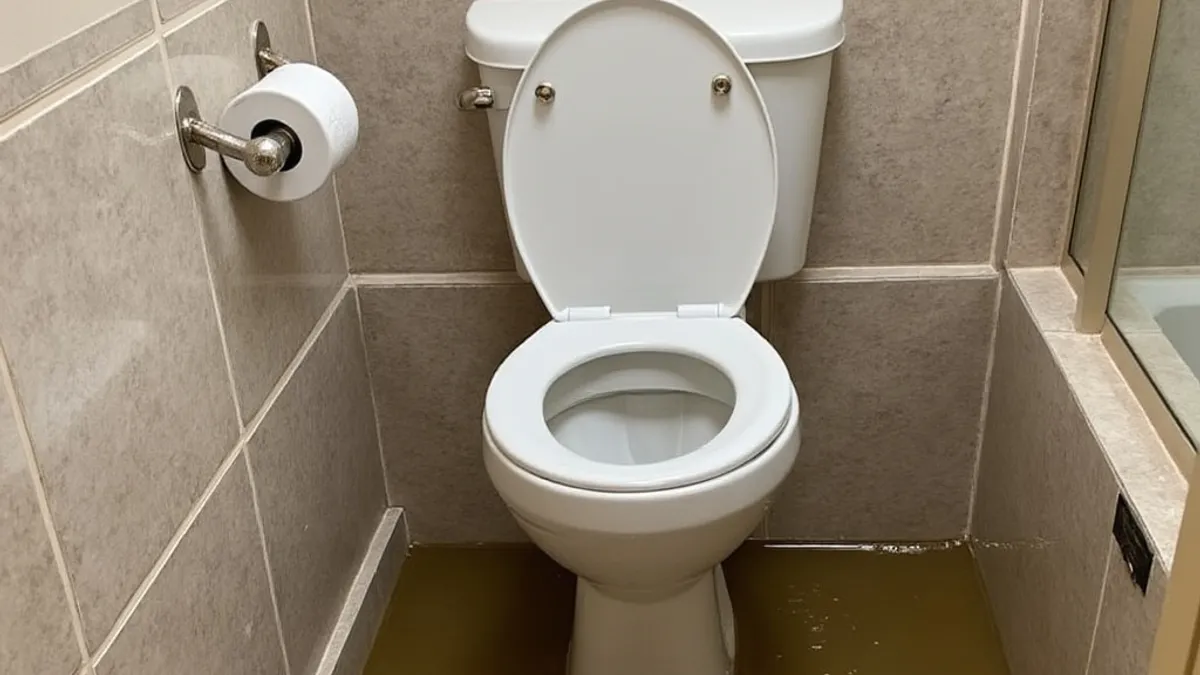
Grossly contaminated water that can carry pathogens — sewage, backups from past the toilet trap, and ground or surface water that has entered the building. S500 generally calls for porous materials that absorbed it, such as carpet cushion and insulation, to be removed rather than dried.
Classification per ANSI/IICRC S500, the industry standard for professional water damage restoration.
Water damage is not one event, it is a sequence. Each stage costs more to undo than the one before it, which is why drying starts before anything else does.
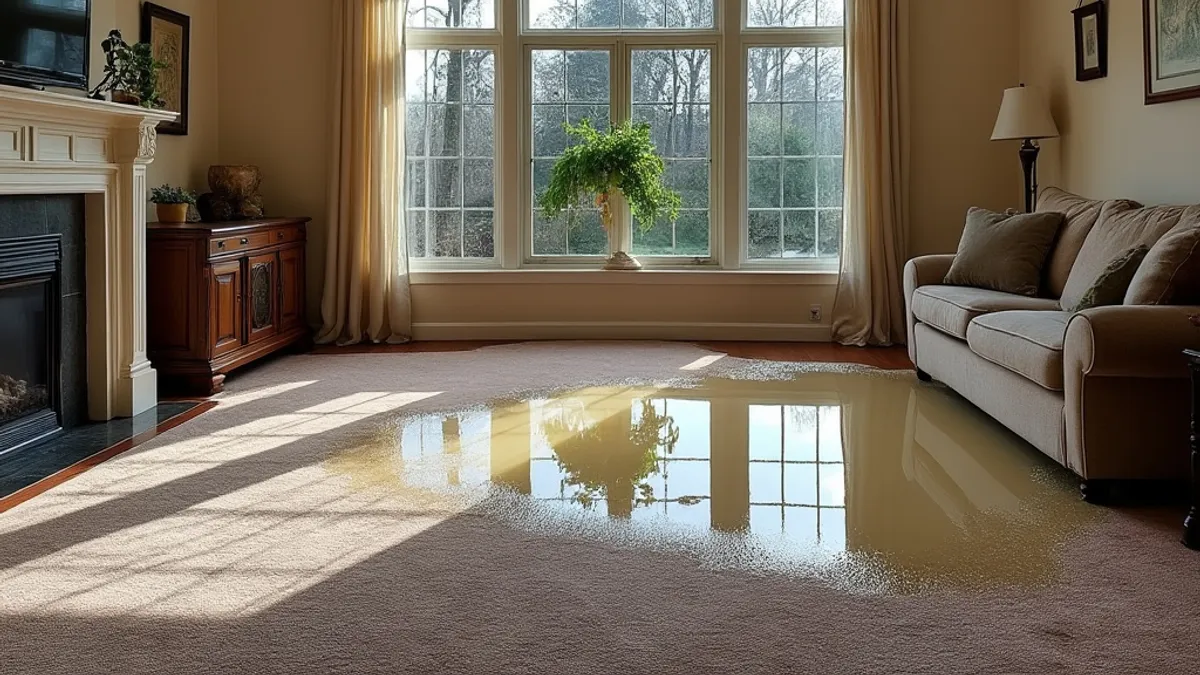
First hours
It runs along the floor and wicks upward into drywall, carpet cushion and insulation, so the wet area is already larger than the puddle you can see.
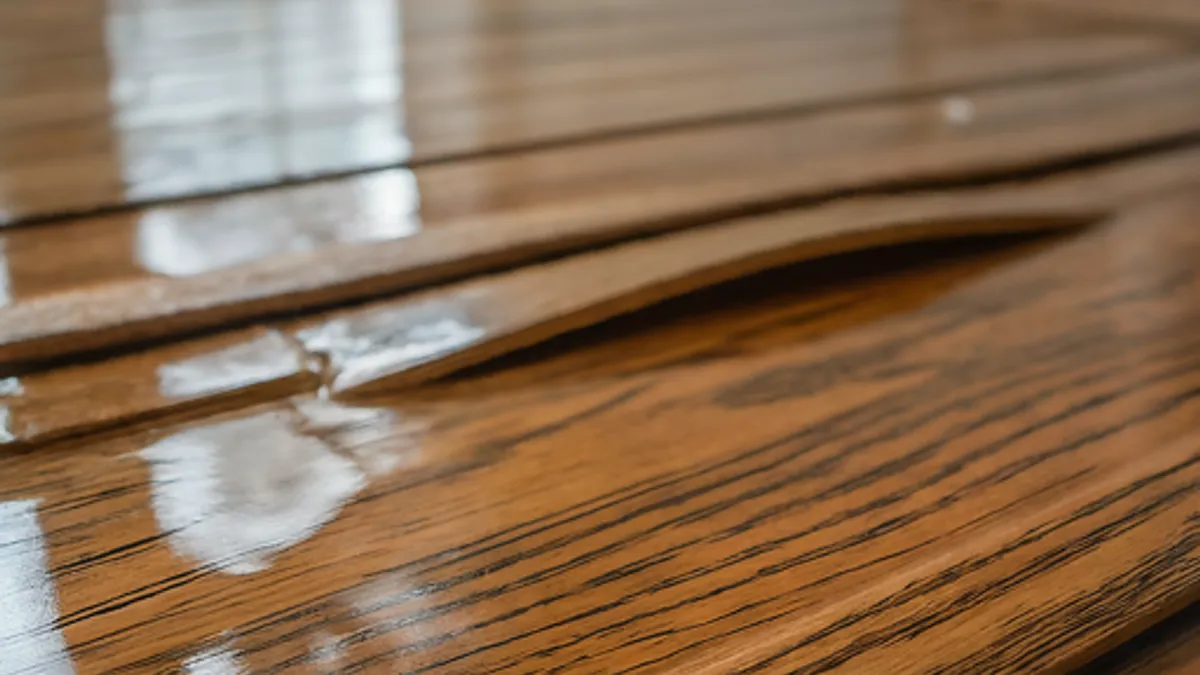
1–24 hours
Wood swells and cups, drywall softens, and anything made of pressed board or laminate begins to come apart at the seams.
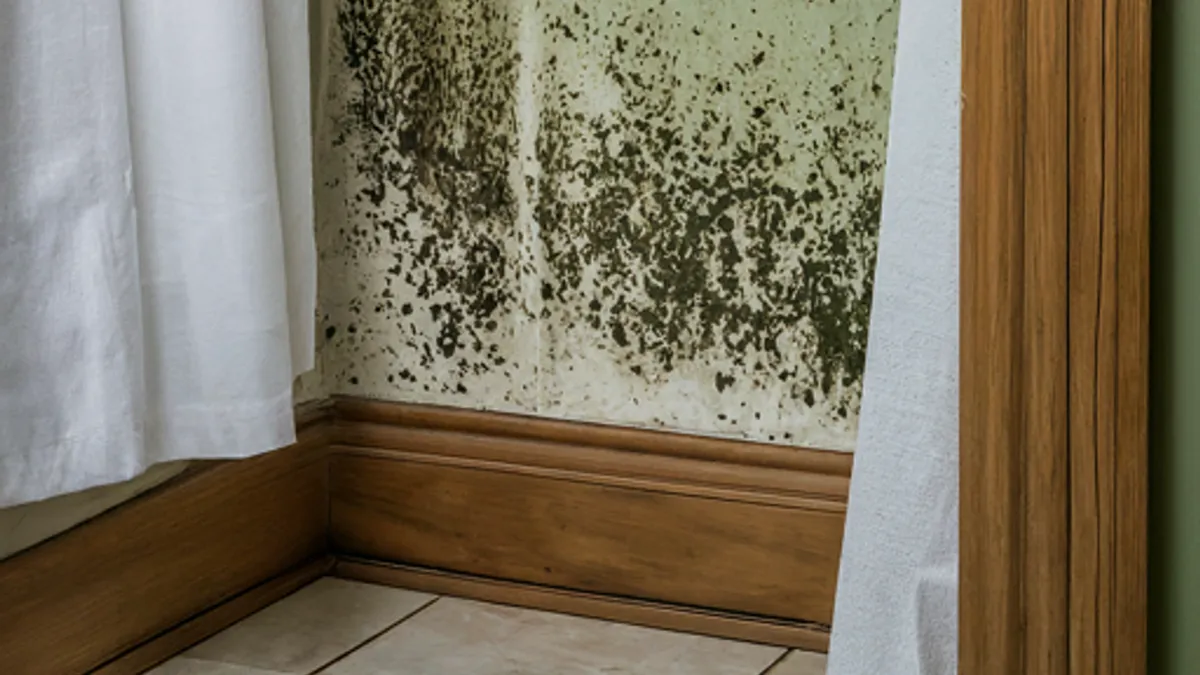
24–48 hours
EPA guidance is that wet material dried inside the first 24 to 48 hours will, in most cases, not grow mold. Past that window it can, and then the job is no longer only about water.
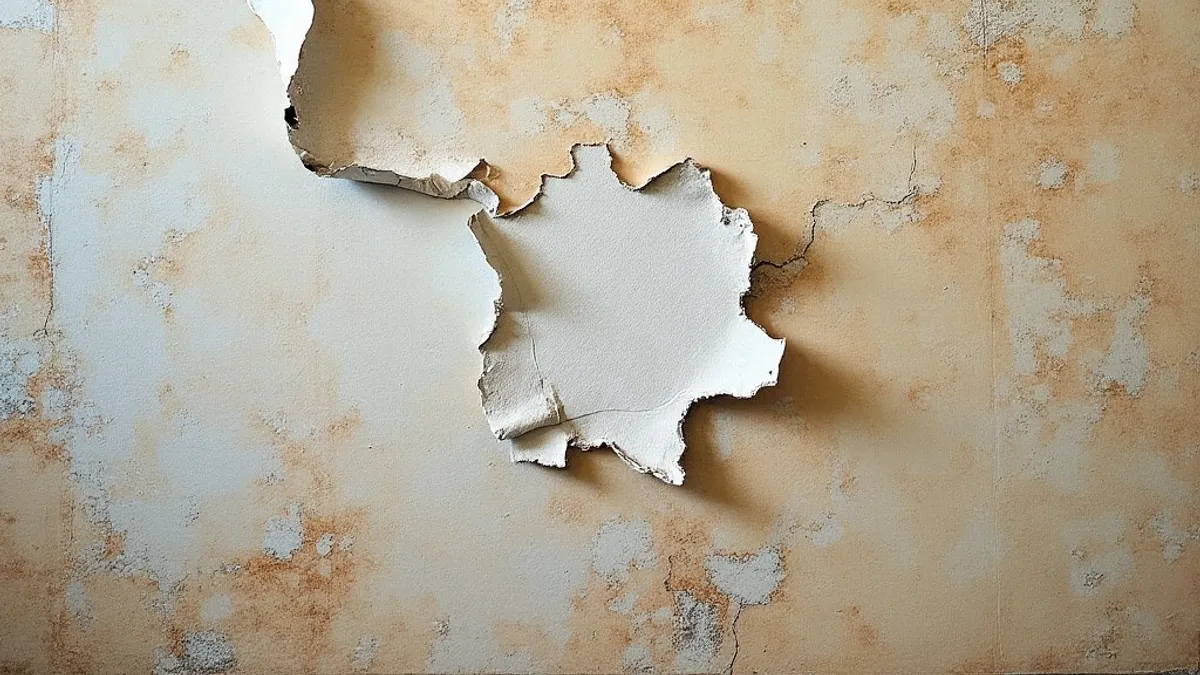
2–7 days
Paint and wallpaper let go, joints open up, and moisture travels through wall cavities into rooms that were never touched by the original leak.
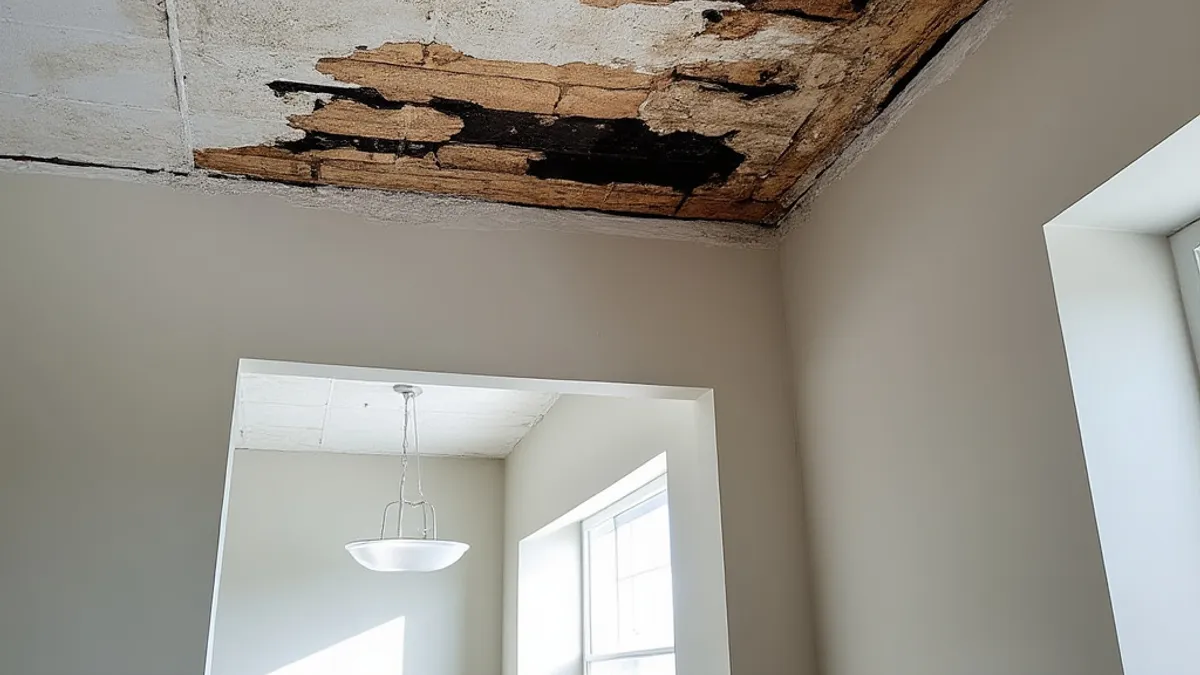
1 week or more
Once structure and finishes have held water this long, the work shifts from drying materials out to cutting them out and putting new ones back.
Mold timing per US EPA guidance on moisture and mold. The other stages vary with the material, the temperature and how much water is involved.
Drying a structure is a measured process, not a matter of pointing fans at a wet floor. Each piece of equipment does one job in that sequence.
Vacuum systems, truck-mounted or portable, that pull standing water out of carpet, cushion and hard surfaces. S500 prioritises physically removing water first, because extraction takes out far more of it, far faster, than evaporation ever will.
Low-profile blowers aimed along a wet surface rather than at it. They peel off the thin layer of saturated air sitting on the material, which is what keeps evaporation from stalling.
Air movers move water out of materials and into the air; dehumidifiers take it back out of the room. Refrigerant units condense it on a cold coil and drain it off, desiccants pull it onto a drying medium. Evaporated water that is not removed raises humidity, and dry materials can take it back on — what S500 calls secondary damage.
Pin and pinless meters read how much water is actually inside wood, drywall and subfloor. S500 sets the finish line as a dry standard — readings taken from unaffected material of the same type in the same building — not how a room looks or feels.
Temperature and relative humidity readings taken inside the drying area, outside it, and at the dehumidifier outlet. Comparing the three shows whether the setup is genuinely pulling water out of the building or just stirring it around.
A thermal camera cannot see water — it sees temperature. Wet material usually reads cooler because evaporation cools it, so the camera narrows down where water travelled behind walls and where to put a meter next.
Sheeting seals the work area and a HEPA-filtered machine holds it under negative pressure, so dust and spores leave through the filter instead of drifting through the building. IICRC S520 treats containment and HEPA filtration as standard controls when contaminated material is disturbed.
Floor mats and structural cavity drying systems move air through wall and ceiling cavities, under flooring, and into enclosed spaces such as the void beneath cabinets. The aim is to dry an assembly in place — where the category of water or the state of the material allows it.
Equipment roles per ANSI/IICRC S500; containment guidance per IICRC S520 and EPA mold guidance.
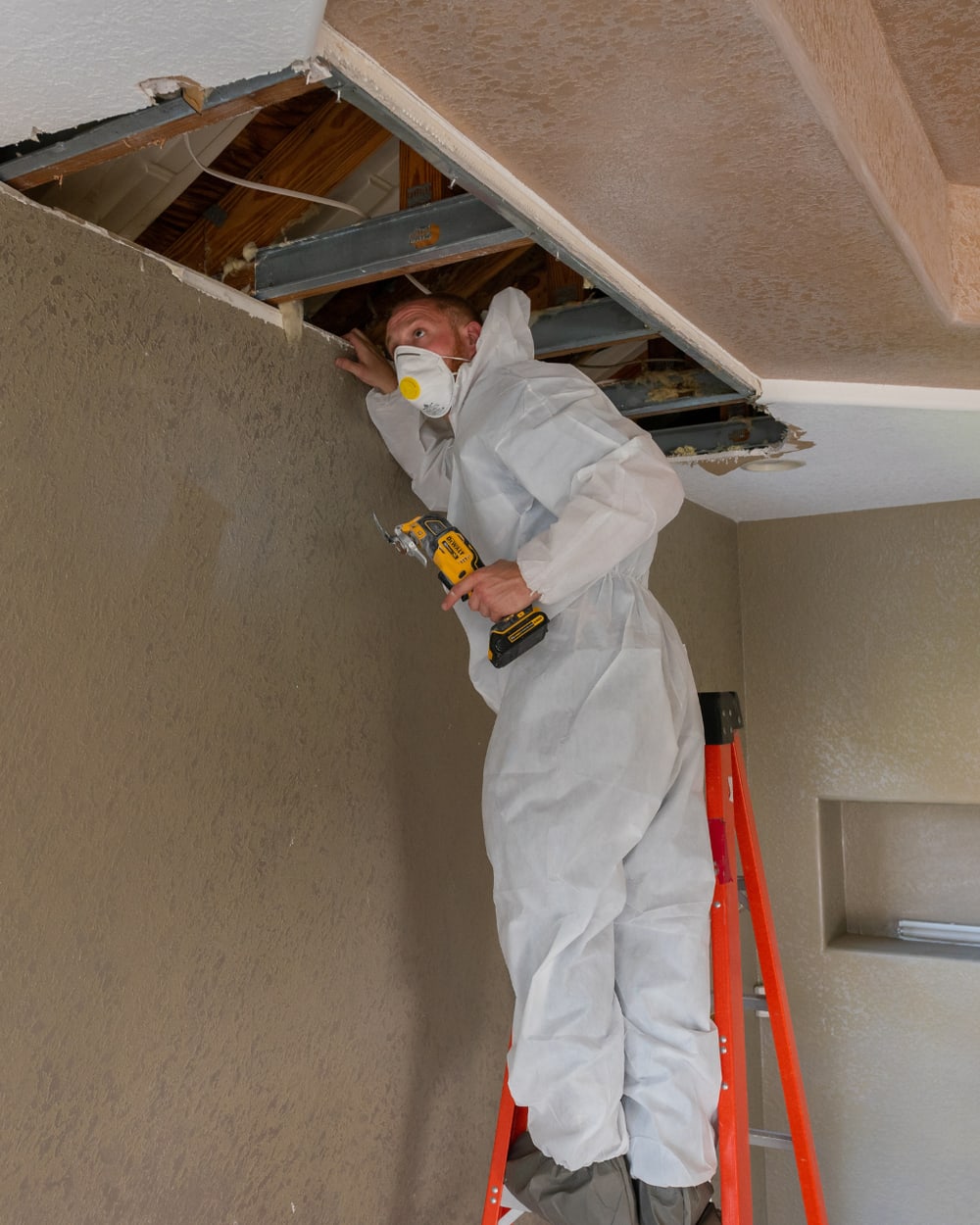
Drying in place is the goal, and it is often achievable. What decides it is the category of the water and what the material is made of — a measured judgement rather than a guess. Under ANSI/IICRC S500, porous materials that absorbed contaminated water are generally removed rather than dried, while materials wet by clean water can frequently be dried where they are.
Where an assembly has to be opened, it is opened deliberately: enough to reach wet insulation and framing, documented before anything is cut, and put back by the same company that took it out.
Restoration is stressful enough without fighting through a claim alone. Our crews document everything — photos, moisture readings, and a clear scope of work — in the format adjusters expect, and we communicate with your insurance company throughout the job. You always know what is happening and what your policy covers before work begins.











Flood work is not glamorous. It is extraction, demolition, disinfection, and then a long stretch of metered drying while the homeowner lives somewhere else. What separates a job that holds from one that comes back in three months is whether anybody accounted for the parts of the building that hold water quietly: the gap behind drywall on a furred block wall, the slab with groundwater sitting six inches beneath it, the bottom plate, the void under a terrazzo floor's covering. We are United Water Restoration Group of Pinellas County, at 3734 131st Avenue N, Unit #12, Clearwater, FL 33762. We work to IICRC S500 for water damage and S520 for mold remediation, we are available 24/7, and our customers have rated us 4.93 stars across 169 reviews. We cover the whole county — St. Petersburg, Clearwater, Largo, Seminole, Pinellas Park, Palm Harbor, Dunedin, and the unincorporated areas between them. If you are standing in water right now, a few things help before anyone arrives. Shut off power to affected areas at the panel if you can do it safely. Do not walk through floodwater barefoot. Photograph the water line on the wall in every room, and photograph the outside of the house, before anything is moved. Keep the receipts. Then call. Call (727) 263-3778. Someone answers, day or night, and we will tell you plainly what we can do and when we can be there.
Storm surge is legally a flood. Federal regulation defines flood to include the overflow of tidal waters, and a standard Florida homeowners policy excludes flood. Surge damage is a flood claim, handled under an NFIP or private flood policy. Your homeowners policy still covers wind damage and rain that entered through an opening the storm created. Many homes take both kinds of damage in one storm, which is why the entry path gets documented before demolition starts.
Helene answered that for a lot of people. It made landfall more than 150 miles north, in the Big Bend, and still set the all-time record at the Clearwater tide gauge at 6.67 feet above mean higher high water. Water came ashore from both the Gulf and Tampa Bay. Homes in Shore Acres, Snell Isle, Dunedin and Baywood Village in Palm Harbor took water for the first time, some after forty years in the same house. A storm does not have to hit you to flood you.
Not with floodwater. Two problems. The water is contaminated, so extraction and disposal are the smaller part of the job and decontamination is the larger one. And the ambient air here works against you: relative humidity averages around 74 percent year-round and never drops below a 69 percent monthly average, while the EPA recommends indoor humidity below 60 percent. Fans move wet air around. Drying a block-and-slab house takes dehumidification inside a closed envelope, with meter readings tracked to a documented endpoint.
The EPA's guidance is that wet materials dried within 24 to 48 hours will in most cases not grow mold. That window is the whole reason for a 24/7 phone. We are in the Gateway area off Ulmerton Road, which puts Pinellas Park at the door, St. Petersburg and Clearwater fifteen to twenty minutes out, Largo and Seminole about twenty-five, and Palm Harbor about half an hour by the Bayside Bridge and US 19. Those are normal-traffic estimates; storm conditions change them.
It depends on what is on it. Carpet and pad go. Plank, laminate and sheet vinyl usually go, because water sits between them and the slab with no way out. Tile and terrazzo often stay — terrazzo is essentially non-porous and bonded to the slab, so what fails is the adhesive and whatever was glued over it, not the terrazzo itself. In a lot of 1950s and 1960s Pinellas houses, there is a sound original floor under the covering.
No, and in Florida no contractor can. Assignment of benefits is gone for residential policies issued on or after January 1, 2023 — a policyholder cannot assign post-loss benefits, and an attempt to do so is void. You stay the claimant and we bill you. What we do is give you and your adjuster a clear record: photographs, moisture readings, a written scope, and an itemized list of what was removed and why. If a claim gets disputed, Florida runs a free mediation program that the insurer pays for.
What you can see is the surface. Subfloor, wall cavities and insulation hold water long after a floor feels dry underfoot. EPA guidance is to dry water-damaged areas and materials within 24 to 48 hours, because in most cases that is what keeps mold from starting — and the only way to know a material is dry is to measure it.
By measurement, not by calendar. ANSI/IICRC S500 works from two reference points: a dry standard, which is a reasonable approximation of a material’s moisture content before the water got in, and a drying goal for the end of drying. The dry standard is commonly established by reading unaffected material of the same type in the same building, and readings are recorded as drying progresses.
Often, though not always, and it is decided by moisture readings rather than by how bad the cupping looks. Wood cups because the underside is wetter than the top, and specialty mat systems can draw that water back out through the surface. Two things usually end the conversation: water that sat long enough to delaminate an engineered plank, and contaminated water that got underneath. Sanding is the last step, never the first — a floor sanded flat before it finishes drying will crown as it dries.
Please leave it running. Drying is a continuous cycle of evaporation and dehumidification, so hours with the equipment off are hours the materials sit wet. Ask the crew to reposition or re-angle a unit if a room is impossible to sleep in, and if the running cost is the worry, raise it with your adjuster.
Usually not as a first step. EPA guidance is that sampling is generally unnecessary when mold is already visible, because the response is the same either way: fix the moisture and remove the growth. Testing earns its place in narrower situations — confirming a suspected hidden source, or documenting conditions when something is in dispute.
It can, and it is worth knowing before you file. Many homeowners policies draw a line between a sudden, accidental discharge and damage that developed gradually, and the wording varies from policy to policy. Read your own coverage and ask your adjuster directly rather than assuming it either way — and from the start, document what you found and when you found it.
Tell us what happened and we will call you right back. For emergencies, calling (727) 263-3778 is always fastest — we answer 24/7.

In Case of Property Damage, Call:
727-263-3778We answer around the clock and dispatch from right here in Clearwater.
IICRC Certified · Water · Fire · Mold · 24/7 Emergency Response