

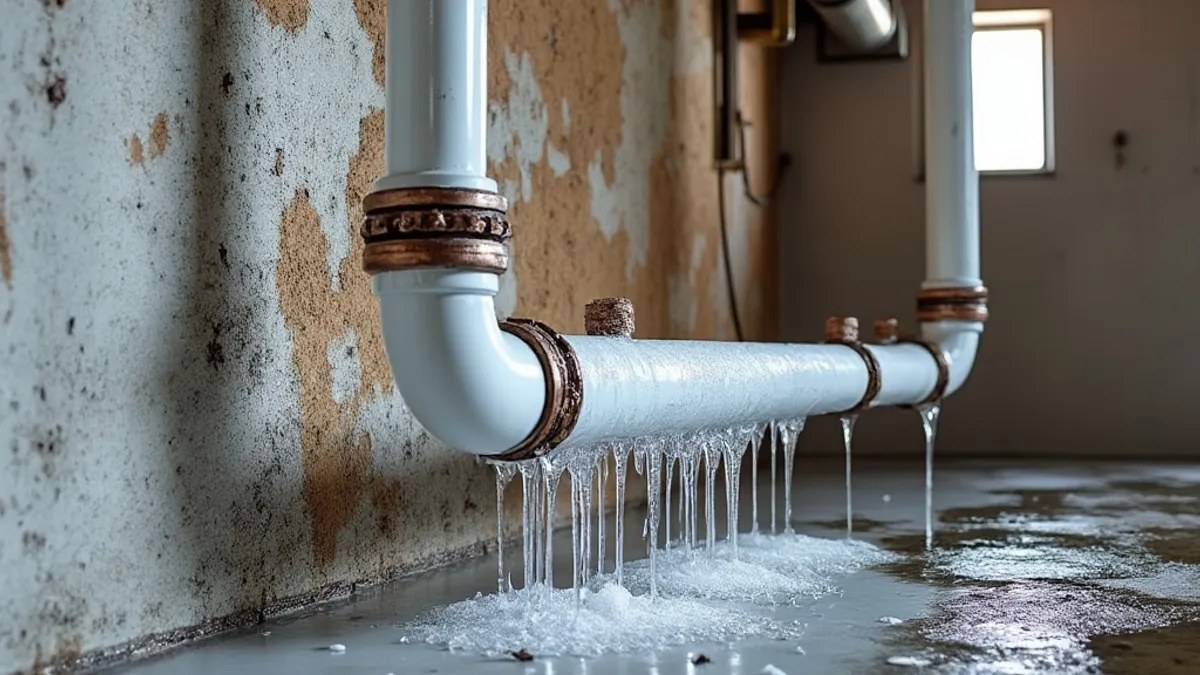
Clean water
Water from a sanitary source — a broken supply line, a water heater, a tub left running. ANSI/IICRC S500 notes it does not stay Category 1 forever: time, temperature and contact with building materials can push it into Category 2 or 3.
Serving all of Pinellas County · Open 24/7 · (727) 263-3778
Water spreads faster than most people expect. In the time it takes to find the shutoff, a broken supply line has already run under the plank flooring, into the bottom plate of the wall, and along the seam where the terrazzo passes beneath a partition. United Water Restoration Group of Pinellas County runs emergency extraction out of 3734 131st Avenue N, Unit #12, Clearwater, FL 33762 — a mid-county shop next to the St. Pete–Clearwater airport, roughly fifteen to twenty minutes from downtown St. Petersburg and about the same to downtown Clearwater. Largo and Seminole are twenty to twenty-five minutes west on Ulmerton Road. Pinellas Park effectively starts at our door. We are available 24/7 because standing water does not wait for business hours. Our rating is 4.93 stars across 169 reviews. Extraction is the first job on any water loss: get the bulk water out of the building before it soaks into materials that are expensive to replace, and before warm, humid Florida air turns a clean loss into a contaminated one. Everything that follows — drying, monitoring, repair — depends on how fast that first step happens.
The call usually comes in the same shape: water is on the floor, nobody is sure where it came from, and the homeowner is standing in it with a shop vac. The first thing we ask on the phone is whether the water is still arriving. If it is, and the source is a supply line or a fixture, the shutoff is the first move — at the fixture if there is a stop valve, at the meter if there is not. On a slab-on-grade house the meter is usually at the street side of the lot.
On arrival we walk the loss before we plug anything in. That means finding the source, checking whether the water has reached an outlet, a panel, or a light fixture below the wet ceiling, and deciding whether the power to that area stays on. It means reading the spread, not just the puddle. Water follows the flattest path it can find, and in a 1960s Pinellas block house with a continuous terrazzo floor under the partitions, the flattest path runs from room to room without ever crossing a doorway you can see.
Then we extract. Bulk water comes out first, in the order that saves the most material: open floor, then carpet and cushion, then the edges where water has wicked up drywall, then anything trapped under cabinet toe kicks and behind baseboards. We take moisture readings in dry areas of the same house first, so we have a real reference point instead of a guess about what dry looks like in this building.
Documentation happens while we work — where the water started, how far it traveled, what it touched, what the readings were on day one. That record matters later, and there is no way to recreate it once the floor is dry.
Extraction equipment is not interchangeable, and the choice is usually made by the building rather than by the water.
A truck-mounted unit lives in the van and runs off the vehicle's engine. It pulls hard, it holds a large volume of recovered water, and it never needs to be emptied by hand — the waste goes to the tank on the truck. For a single-story house in Largo or Seminole with a driveway at the door, that is the fastest way to move hundreds of gallons out of carpet, cushion, and the low corners of a room.
Portable extractors are what we carry when the hose run gets long or the building says no. Nearly one Pinellas housing unit in five sits in a building of twenty or more units, and 62,304 of them are in buildings of fifty or more. On the eighth floor of a Clearwater Beach condominium, a truck at the curb is too far away to hold vacuum. Portables go up in the elevator, plug into a hallway outlet, and discharge into a drain on the same floor. We stage them so nobody is carrying full buckets down a stairwell.
Weighted extraction tools are the third piece. A carpet wand pulled by hand takes water off the top; a weighted head uses the operator's body weight to compress the cushion and pull water out of the pad that a wand leaves behind. That difference decides whether a house dries on schedule or keeps reading wet days later.
We also match the tool to the water. Submersible pumps handle standing depth before any extractor touches it. Anything with solids in it — surge water, a sewage backup — goes through equipment we can decontaminate afterward, and the waste goes out as contaminated water, not down the kitchen sink.
ANSI/IICRC S500, the water damage standard, sorts every loss on two separate scales. Category describes how contaminated the water is. Class describes how hard the building will be to dry. They are not the same scale.
Category 1 water comes from a sanitary source — a supply line, an appliance inlet, a running sink. Category 2 carries significant contamination and can make someone uncomfortable or sick on contact. Category 3 is grossly contaminated and may carry pathogenic or toxigenic material: sewage, and the water that comes in off Tampa Bay or the Gulf during a surge event.
Here is the part that makes speed matter. Category is not fixed at the moment of the leak. S500 recognizes that Category 1 water deteriorates as it sits, as it warms, and as it picks up soils and building materials. There is no statutory hour count — it is a function of time, temperature, and what the water touches. What Pinellas adds is heat and humidity. The annual average relative humidity here runs about 74%, and there is no month that averages below 69%. The monthly normal low never drops below 52.5°F. Nothing about the local environment slows that clock down.
The EPA's guidance is to dry wet materials within 24 to 48 hours, and states that in most cases mold will not grow if you do. That window is real, and in a climate where the outdoor air is above the EPA's recommended indoor humidity ceiling nearly every day of the year, there is no natural drying working in your favor while you wait for a call back.
A clean loss extracted on hour two is a straightforward drying job. The same loss found on day three is often a demolition job.
One caution: the IICRC's consensus body stated in March 2026 that a weather-related event is not automatically Category 3. Category is determined by inspection, not by the headline.
Half the housing in this county is close to fifty years old — the median year built is 1976, 59.4% of units went up before 1980, and 86.8% before 2000. That housing stock has specific failure points, and extraction has to account for them or the water stays behind.
Start with the walls. Most single-family homes here are concrete block with stucco, and in a block house the drywall is not stuck to the block. It hangs on furring strips, which leaves a narrow concealed cavity between the drywall and the masonry. Water runs down into that cavity and sits there. A surface moisture meter reads the drywall face and finds nothing. The block itself holds moisture and keeps feeding it back into the wall for days. This is why we pull baseboard and make flood cuts on block walls instead of trusting a dry surface reading — it is not damage for its own sake, it is access.
Then the floor. Slab-on-grade is near-universal in Pinellas: the water table sits within six to eighteen inches of the surface for months in a typical year, limestone is shallow, and there are no basements anywhere in the county. Older slabs poured before under-slab vapor barriers were routine will re-wet themselves from below. A slab that tests dry at the surface can still fail a floor installed on top of it.
Terrazzo complicates it further. From the 1950s into the early 1970s, terrazzo was poured across the whole footprint and ground smooth before the interior partitions were framed on top of it. The floor is continuous under the walls. Water crosses between rooms underneath partitions, so a room cannot be isolated and dried on its own.
Two-story homes are often block downstairs and wood frame upstairs — one house, two different drying problems.
Storm work is different from a broken supply line in almost every respect except urgency.
Hurricane Helene made landfall more than 150 miles north of here on September 26, 2024, in the Big Bend, and still produced the worst storm surge on record for Pinellas County. The tide gauge at Clearwater read 6.67 feet above mean higher high water, breaking a record that went back to 1973. The National Hurricane Center measured 5 to 7 feet of water above ground level along the Gulf coast from the Anclote River south. Twelve people in this county were killed by that surge. Shore Acres, Snell Isle, Coquina Key and Venetian Isles took bay water; Clearwater Beach, Indian Rocks Beach and Treasure Island took Gulf water. A lot of those homes had never flooded before.
Milton came thirteen days later and was a different problem — wind and rain, not surge. It dropped 18.87 inches on St. Petersburg, including 5.09 inches in the hour from 8 to 9 p.m. on October 9, and gusted to 102 mph at the St. Pete airport. Between them, the two storms damaged 40,910 homes in Pinellas County.
Here is what that means for an extraction crew. Surge water is treated as grossly contaminated until an inspection says otherwise, because of what it carries. It does not get dried in place — saturated porous material comes out. And wind-driven rain is a separate mechanism: at roughly 90 mph, rain enters attics through soffit and gable vents with no breach of the roof covering, saturating insulation and collapsing ceilings in houses that look fine from the street.
We document the entry path and the water line on day one, before anything moves. Water that entered at the slab and water that entered through an opening the wind made are two different claims. That distinction gets decided on evidence, and the evidence disappears when the house dries out.
A few minutes of the right first moves can save thousands in damage. Here is what to do — and what not to do — before we arrive.
Crews are standing by in Pinellas County right now.
Call (727) 263-3778How It Works
The hardest part of property damage is facing it on your own. You do not have to — from the first phone call, it is our job, not yours.
Step 01
Any hour, any day, a real person picks up — not a machine and not a national call center. You describe what you are looking at, and from that moment it stops being your problem to solve on your own.
Step 02
Our crew works out how far it has really gone, including what you cannot see behind walls and under floors. You do not have to know what to look for, or guess how bad it is.
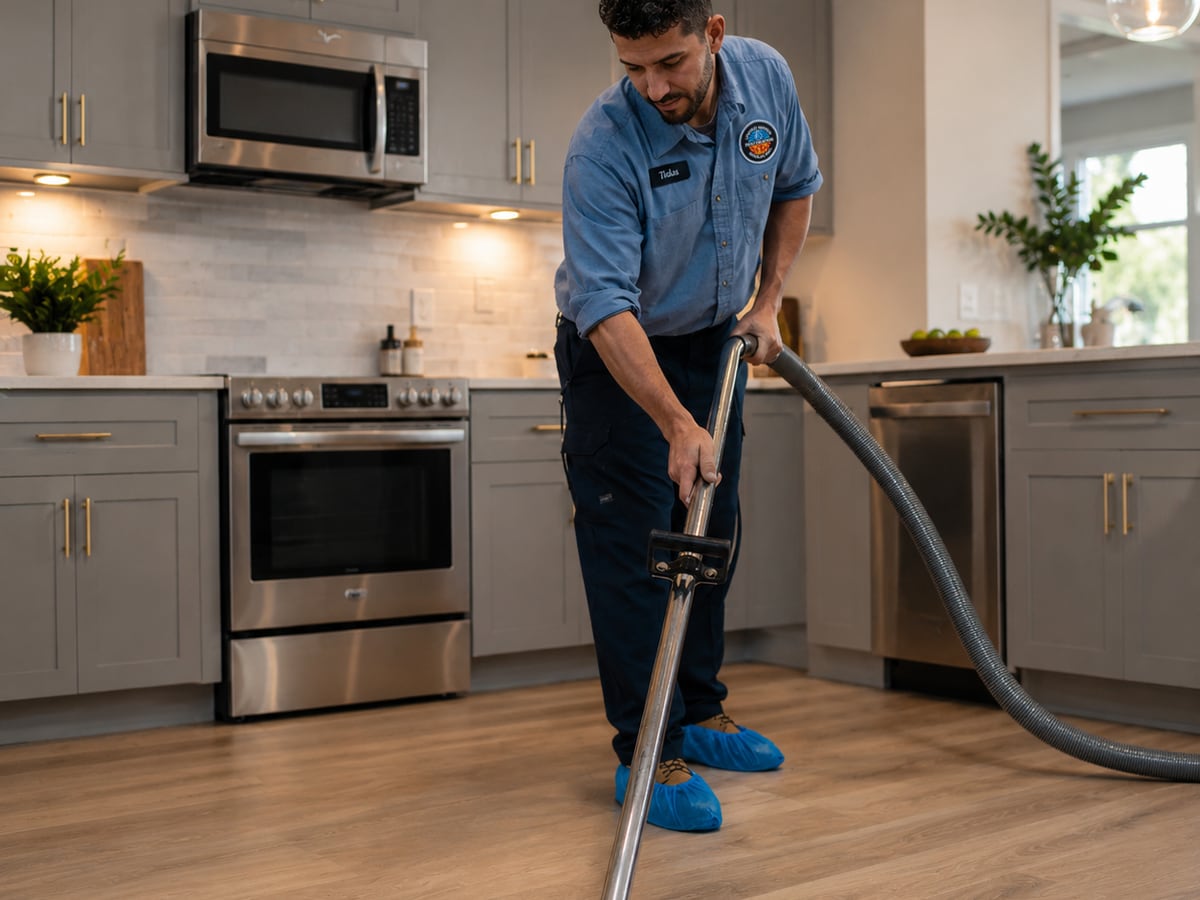
Step 03
What comes out, what gets dried, what can be saved — those are our calls to make, and we explain each one as we go. Readings are recorded throughout, so nothing rests on you taking our word for it.
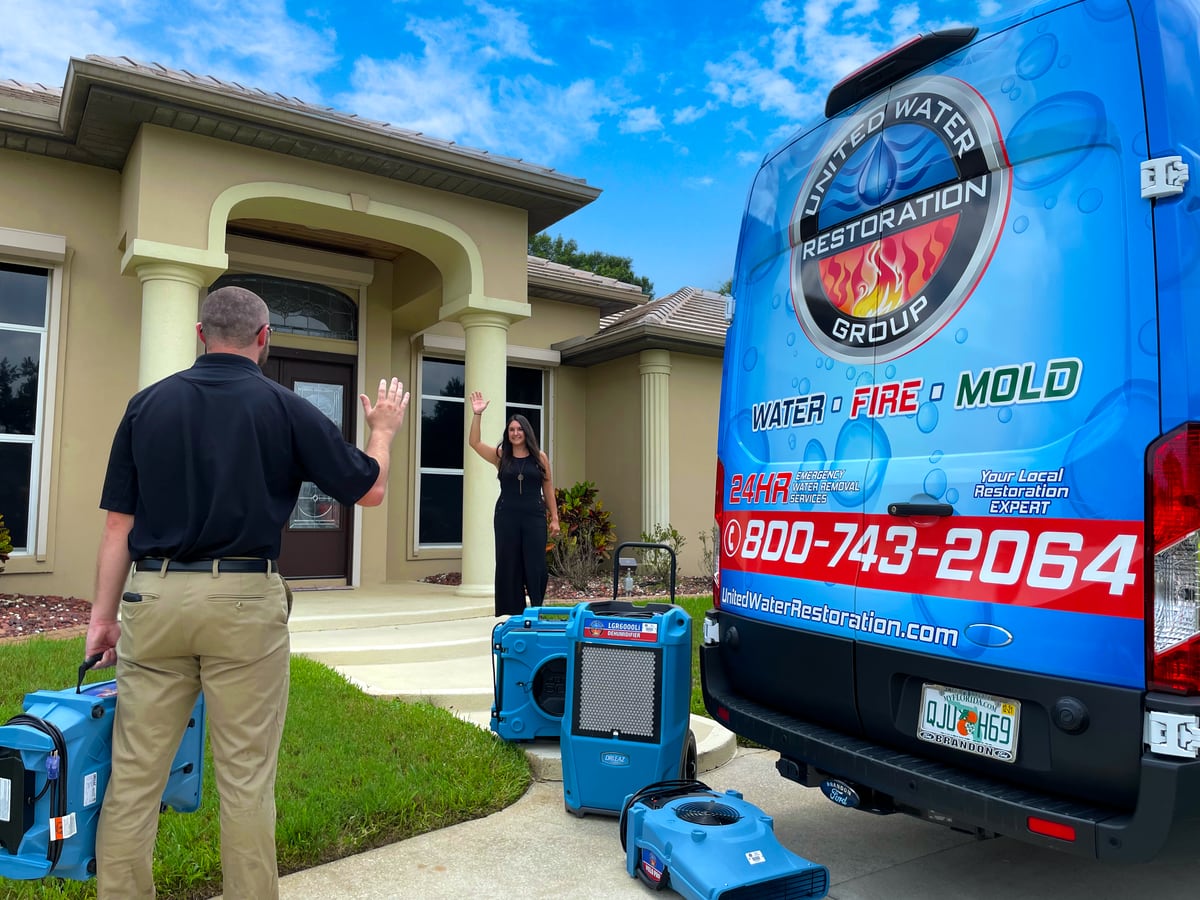
Step 04
Our own team rebuilds what came out and hands the place back finished, with everything documented the way your adjuster expects it.
The restoration standard sorts water by how contaminated it is, and that classification — not how much of it there is — decides what can be dried and what has to go.
Water from a sanitary source — a broken supply line, a water heater, a tub left running. ANSI/IICRC S500 notes it does not stay Category 1 forever: time, temperature and contact with building materials can push it into Category 2 or 3.
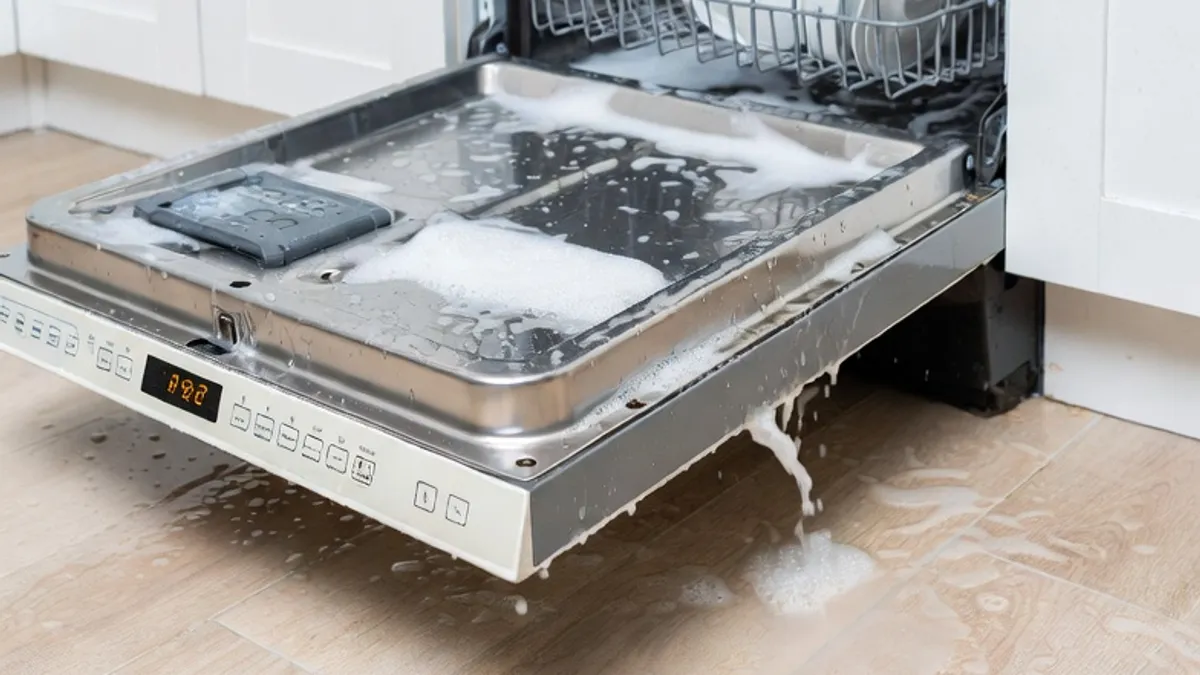
Water with significant contamination — enough that it could cause discomfort or illness if someone touched it or swallowed it. S500 puts dishwasher and washing-machine discharge, an overflow from the toilet bowl itself with urine but no feces, and seepage through a foundation under hydrostatic pressure in this group.
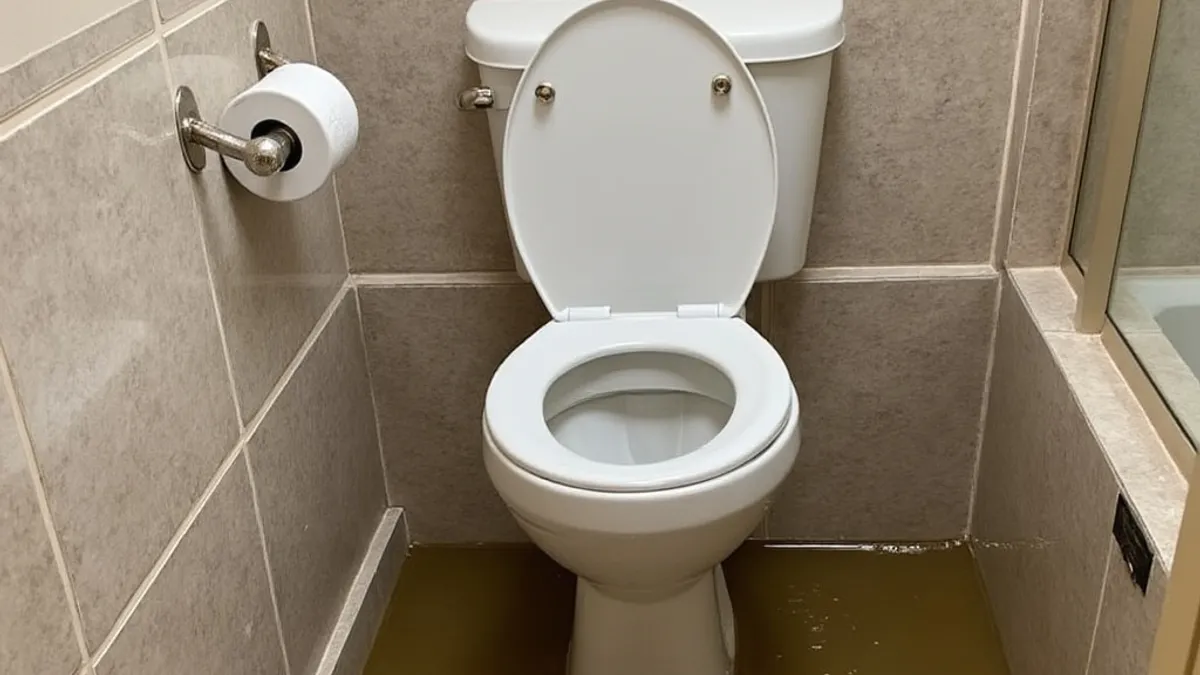
Grossly contaminated water that can carry pathogens — sewage, backups from past the toilet trap, and ground or surface water that has entered the building. S500 generally calls for porous materials that absorbed it, such as carpet cushion and insulation, to be removed rather than dried.
Classification per ANSI/IICRC S500, the industry standard for professional water damage restoration.
Water damage is not one event, it is a sequence. Each stage costs more to undo than the one before it, which is why drying starts before anything else does.
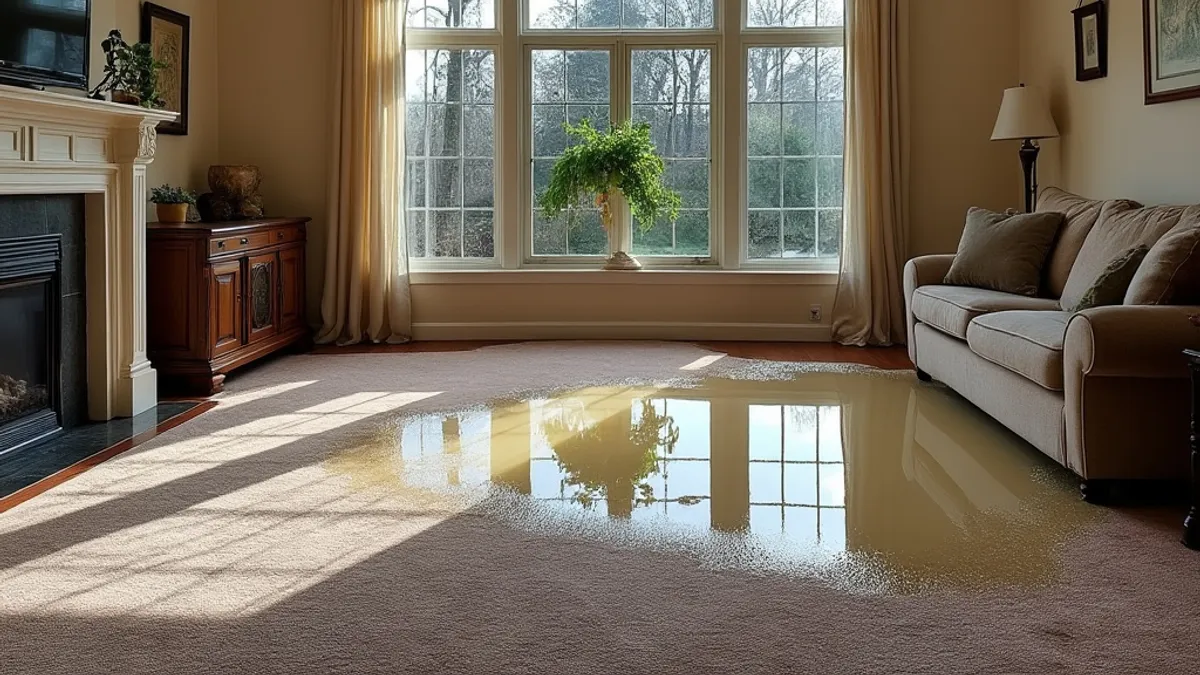
First hours
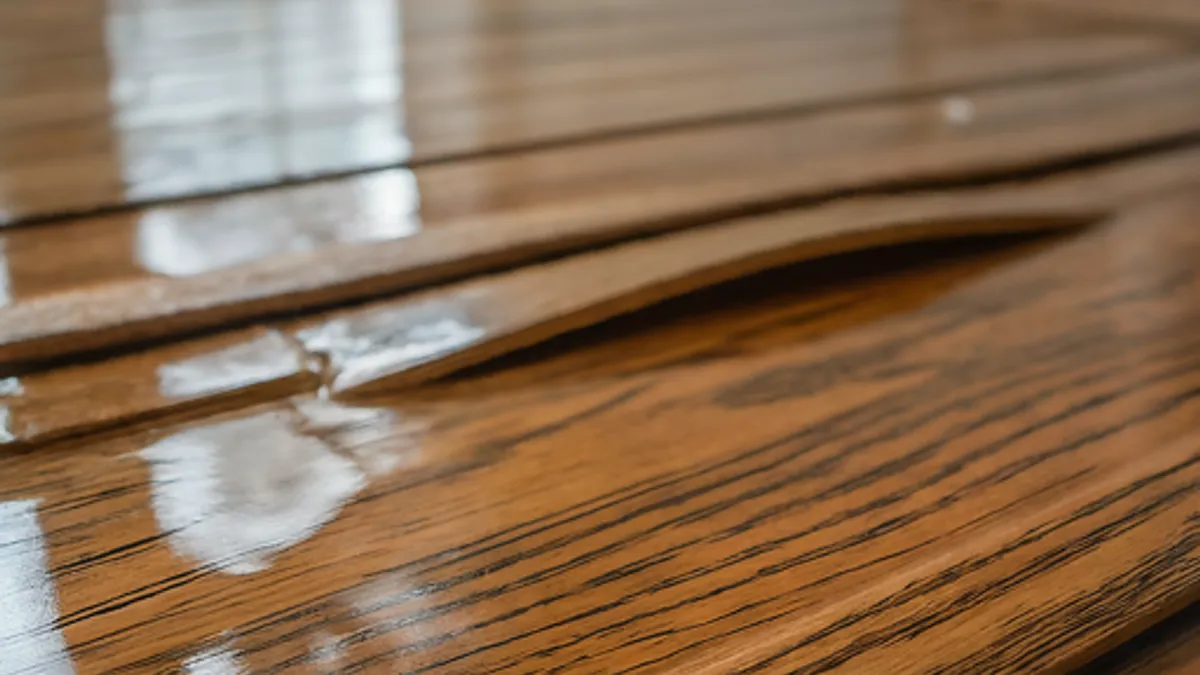
It runs along the floor and wicks upward into drywall, carpet cushion and insulation, so the wet area is already larger than the puddle you can see.
1–24 hours
Wood swells and cups, drywall softens, and anything made of pressed board or laminate begins to come apart at the seams.
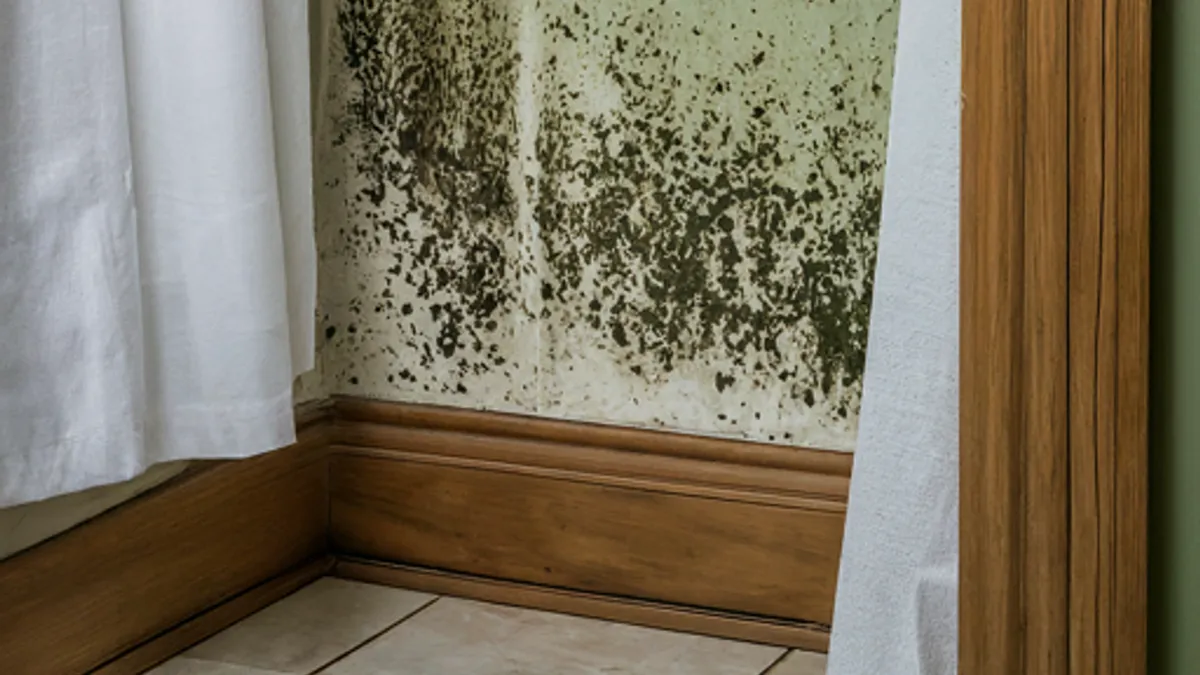
24–48 hours
EPA guidance is that wet material dried inside the first 24 to 48 hours will, in most cases, not grow mold. Past that window it can, and then the job is no longer only about water.
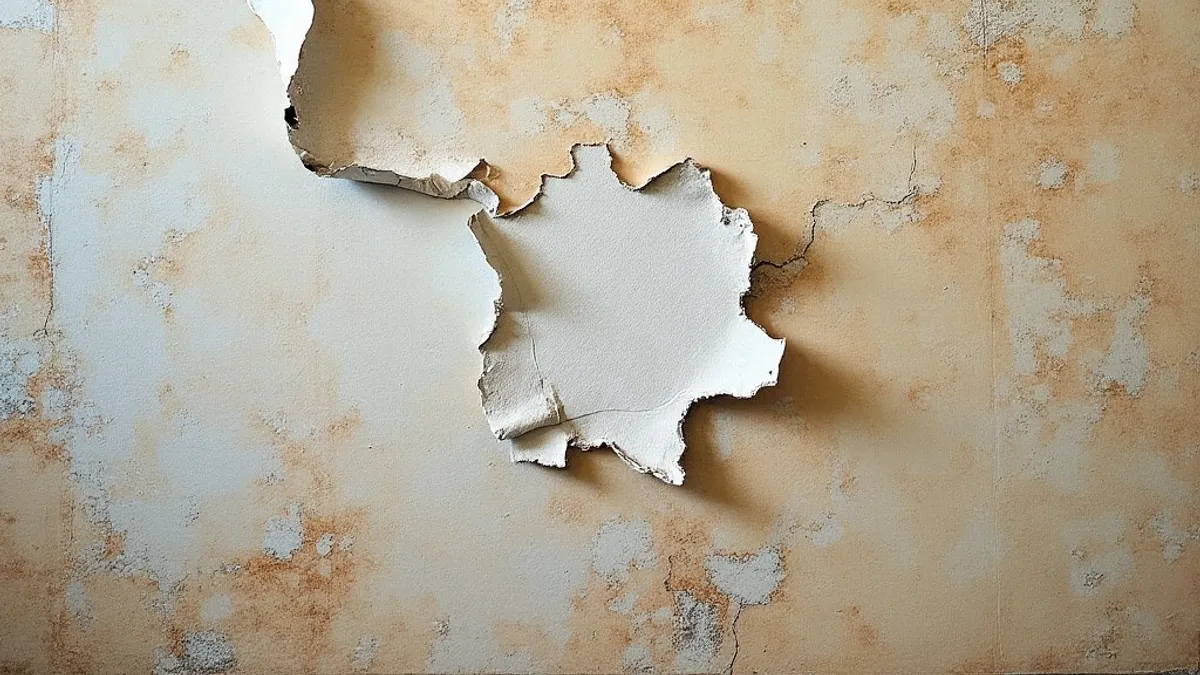
2–7 days
Paint and wallpaper let go, joints open up, and moisture travels through wall cavities into rooms that were never touched by the original leak.
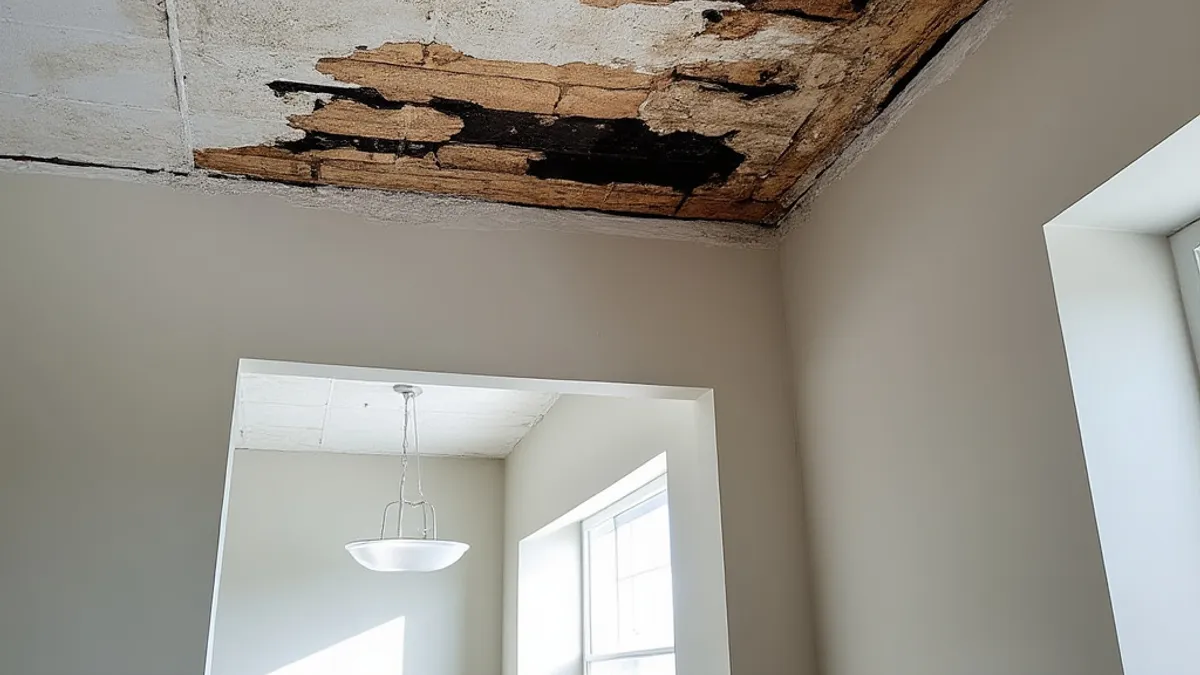
1 week or more
Once structure and finishes have held water this long, the work shifts from drying materials out to cutting them out and putting new ones back.
Mold timing per US EPA guidance on moisture and mold. The other stages vary with the material, the temperature and how much water is involved.
Drying a structure is a measured process, not a matter of pointing fans at a wet floor. Each piece of equipment does one job in that sequence.
Vacuum systems, truck-mounted or portable, that pull standing water out of carpet, cushion and hard surfaces. S500 prioritises physically removing water first, because extraction takes out far more of it, far faster, than evaporation ever will.
Low-profile blowers aimed along a wet surface rather than at it. They peel off the thin layer of saturated air sitting on the material, which is what keeps evaporation from stalling.
Air movers move water out of materials and into the air; dehumidifiers take it back out of the room. Refrigerant units condense it on a cold coil and drain it off, desiccants pull it onto a drying medium. Evaporated water that is not removed raises humidity, and dry materials can take it back on — what S500 calls secondary damage.
Pin and pinless meters read how much water is actually inside wood, drywall and subfloor. S500 sets the finish line as a dry standard — readings taken from unaffected material of the same type in the same building — not how a room looks or feels.
Temperature and relative humidity readings taken inside the drying area, outside it, and at the dehumidifier outlet. Comparing the three shows whether the setup is genuinely pulling water out of the building or just stirring it around.
A thermal camera cannot see water — it sees temperature. Wet material usually reads cooler because evaporation cools it, so the camera narrows down where water travelled behind walls and where to put a meter next.
Sheeting seals the work area and a HEPA-filtered machine holds it under negative pressure, so dust and spores leave through the filter instead of drifting through the building. IICRC S520 treats containment and HEPA filtration as standard controls when contaminated material is disturbed.
Floor mats and structural cavity drying systems move air through wall and ceiling cavities, under flooring, and into enclosed spaces such as the void beneath cabinets. The aim is to dry an assembly in place — where the category of water or the state of the material allows it.
Equipment roles per ANSI/IICRC S500; containment guidance per IICRC S520 and EPA mold guidance.
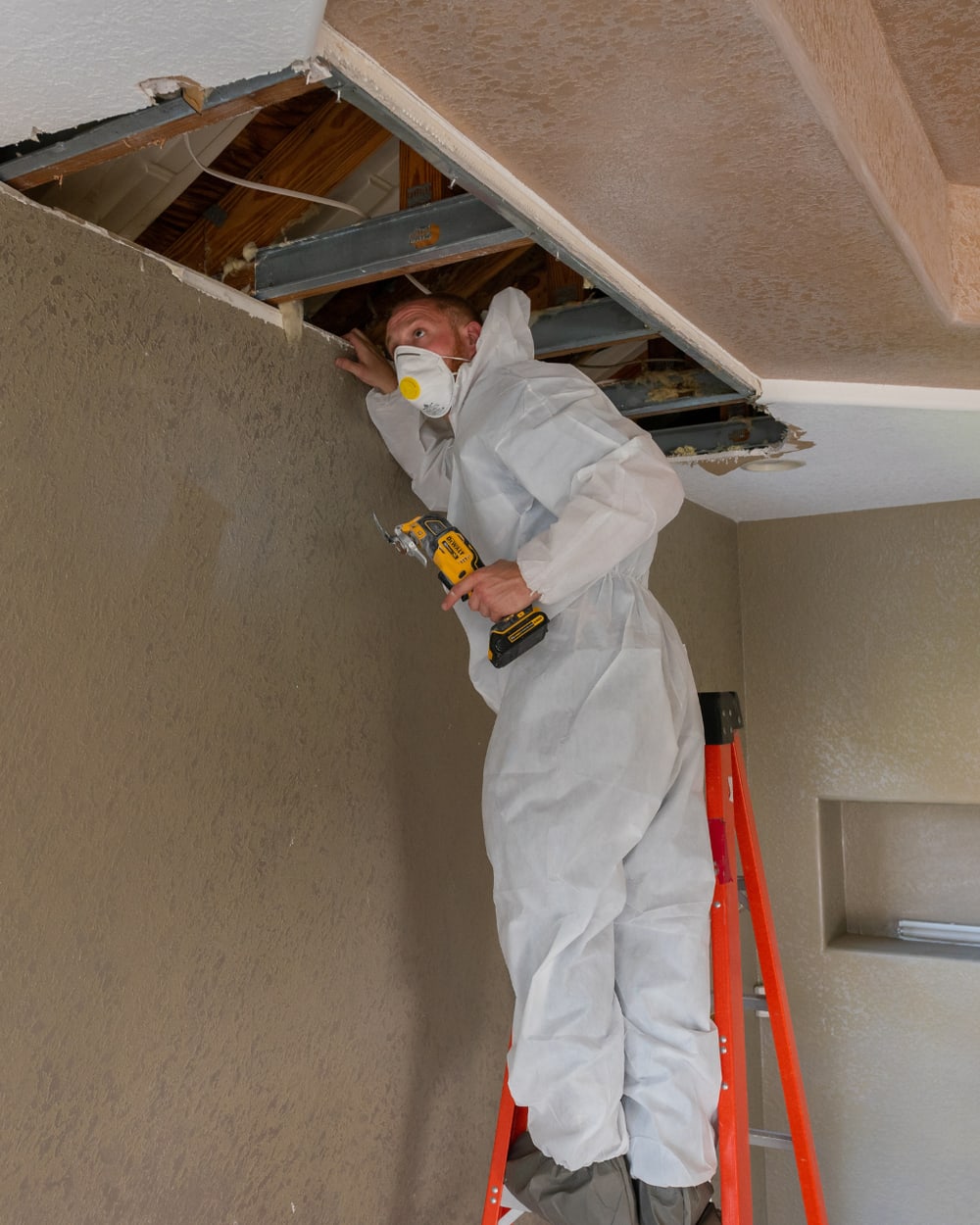
Drying in place is the goal, and it is often achievable. What decides it is the category of the water and what the material is made of — a measured judgement rather than a guess. Under ANSI/IICRC S500, porous materials that absorbed contaminated water are generally removed rather than dried, while materials wet by clean water can frequently be dried where they are.
Where an assembly has to be opened, it is opened deliberately: enough to reach wet insulation and framing, documented before anything is cut, and put back by the same company that took it out.
Restoration is stressful enough without fighting through a claim alone. Our crews document everything — photos, moisture readings, and a clear scope of work — in the format adjusters expect, and we communicate with your insurance company throughout the job. You always know what is happening and what your policy covers before work begins.










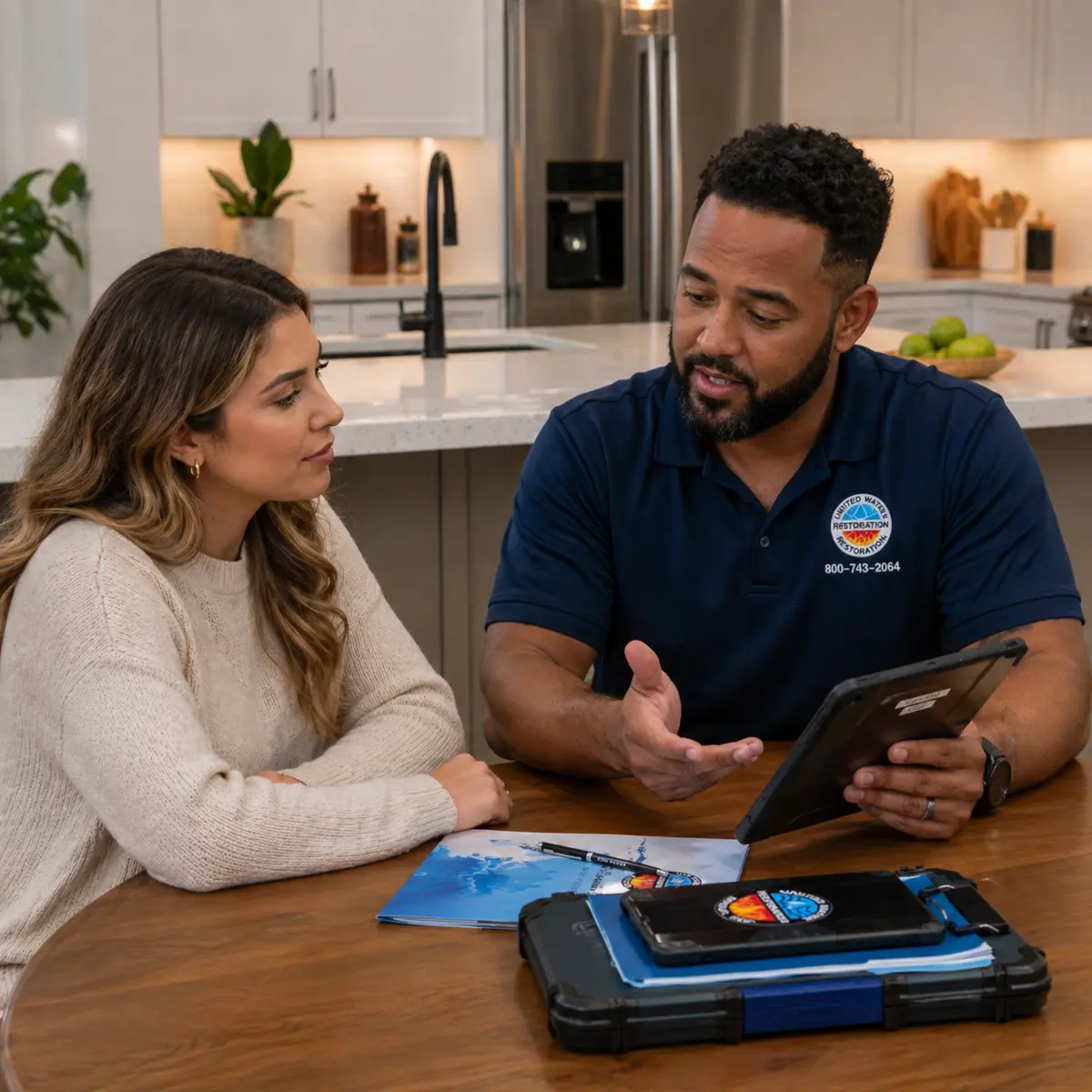
Extraction is the least glamorous part of this work and the part that decides everything else. Water that is out of the building in the first hours is water that never gets into the furring cavity behind the drywall, never soaks the cushion under the carpet, and never sits long enough in Florida heat to turn into a contamination problem. Water that stays becomes demolition, replacement, and weeks of disruption. If there is standing water in your house right now, do three things. Stop the source if you can reach a valve safely. Stay out of any room where water has reached an outlet, a cord, or a panel. Take photographs of the water line and where it came in before anything gets moved — that record is worth more than anyone tells you at the time. Then call. We are at 3734 131st Avenue N, Unit #12, Clearwater, FL 33762, which puts a truck about fifteen to twenty minutes from most of St. Petersburg and Clearwater, a few minutes from Pinellas Park, and roughly half an hour from Palm Harbor at the far end of the county. We work to IICRC S500 on water and S520 on mold, we answer the phone at three in the morning, and our neighbors have rated us 4.93 stars across 169 reviews. (727) 263-3778. Call and tell us what you are looking at. We will tell you plainly what happens next.
We run out of 3734 131st Avenue N, Unit #12, in mid-county Clearwater, which is about as central as Pinellas gets. Pinellas Park starts at our door. Downtown St. Petersburg and downtown Clearwater are both roughly fifteen to twenty minutes. Largo and Seminole run twenty to twenty-five. Dunedin is twenty-five to thirty and Palm Harbor about half an hour. Those are normal-traffic estimates, not promises — Ulmerton and US 19 can change them. We answer the phone at any hour.
For a cup of water on a tile floor, a towel is fine. The trouble starts where you cannot see. A shop vac takes water off the surface of carpet and leaves the cushion underneath saturated. It does nothing for the cavity behind drywall on a block wall, or for water that has run under plank flooring. The EPA puts the drying window at 24 to 48 hours, and at about 74% average humidity here, the air will not do it for you.
Federal law defines a flood to include the overflow of inland or tidal waters, so storm surge is a flood loss, not a wind loss. Standard Florida homeowners policies exclude flood entirely; that coverage comes from a separate NFIP or private flood policy. NFIP residential limits are $250,000 on the building and $100,000 on contents, and the NFIP dwelling form does not pay temporary housing. Your carrier decides your claim — we document conditions, we do not adjust it.
Extraction removes liquid water mechanically. Drying removes what is left by turning it into vapor and pulling that vapor out of the air with dehumidifiers and air movers. The order matters because every gallon you pull out with a wand is a gallon the dehumidifier never has to evaporate. Crews that rush to set equipment before they finish extracting end up running machines for days longer than the job needed.
A dry surface is not a dry building. On a block wall, water sits in the furring cavity behind drywall that reads fine to the touch. An older slab poured without a vapor barrier can test dry on top while still wet underneath. Terrazzo runs continuously beneath the partition walls, so water travels to rooms that were never touched. A meter reading against an unaffected part of the same house settles the question in a few minutes.
Florida licenses mold assessors and remediators as individuals, not as companies, and the license requirement attaches to jobs over ten square feet. State law also separates the party that assesses mold from the party that remediates it for twelve months in both directions, with an exception for certified Division I contractors who disclose your right to request competitive bids. We work to IICRC S520, whose goal is returning an affected area to Condition 1. Ask any contractor for the individual license number on your job.
What you can see is the surface. Subfloor, wall cavities and insulation hold water long after a floor feels dry underfoot. EPA guidance is to dry water-damaged areas and materials within 24 to 48 hours, because in most cases that is what keeps mold from starting — and the only way to know a material is dry is to measure it.
By measurement, not by calendar. ANSI/IICRC S500 works from two reference points: a dry standard, which is a reasonable approximation of a material’s moisture content before the water got in, and a drying goal for the end of drying. The dry standard is commonly established by reading unaffected material of the same type in the same building, and readings are recorded as drying progresses.
Often, though not always, and it is decided by moisture readings rather than by how bad the cupping looks. Wood cups because the underside is wetter than the top, and specialty mat systems can draw that water back out through the surface. Two things usually end the conversation: water that sat long enough to delaminate an engineered plank, and contaminated water that got underneath. Sanding is the last step, never the first — a floor sanded flat before it finishes drying will crown as it dries.
Please leave it running. Drying is a continuous cycle of evaporation and dehumidification, so hours with the equipment off are hours the materials sit wet. Ask the crew to reposition or re-angle a unit if a room is impossible to sleep in, and if the running cost is the worry, raise it with your adjuster.
Usually not as a first step. EPA guidance is that sampling is generally unnecessary when mold is already visible, because the response is the same either way: fix the moisture and remove the growth. Testing earns its place in narrower situations — confirming a suspected hidden source, or documenting conditions when something is in dispute.
It can, and it is worth knowing before you file. Many homeowners policies draw a line between a sudden, accidental discharge and damage that developed gradually, and the wording varies from policy to policy. Read your own coverage and ask your adjuster directly rather than assuming it either way — and from the start, document what you found and when you found it.
Tell us what happened and we will call you right back. For emergencies, calling (727) 263-3778 is always fastest — we answer 24/7.

In Case of Property Damage, Call:
727-263-3778We answer around the clock and dispatch from right here in Clearwater.
IICRC Certified · Water · Fire · Mold · 24/7 Emergency Response